Getting group rooming off the spreadsheet
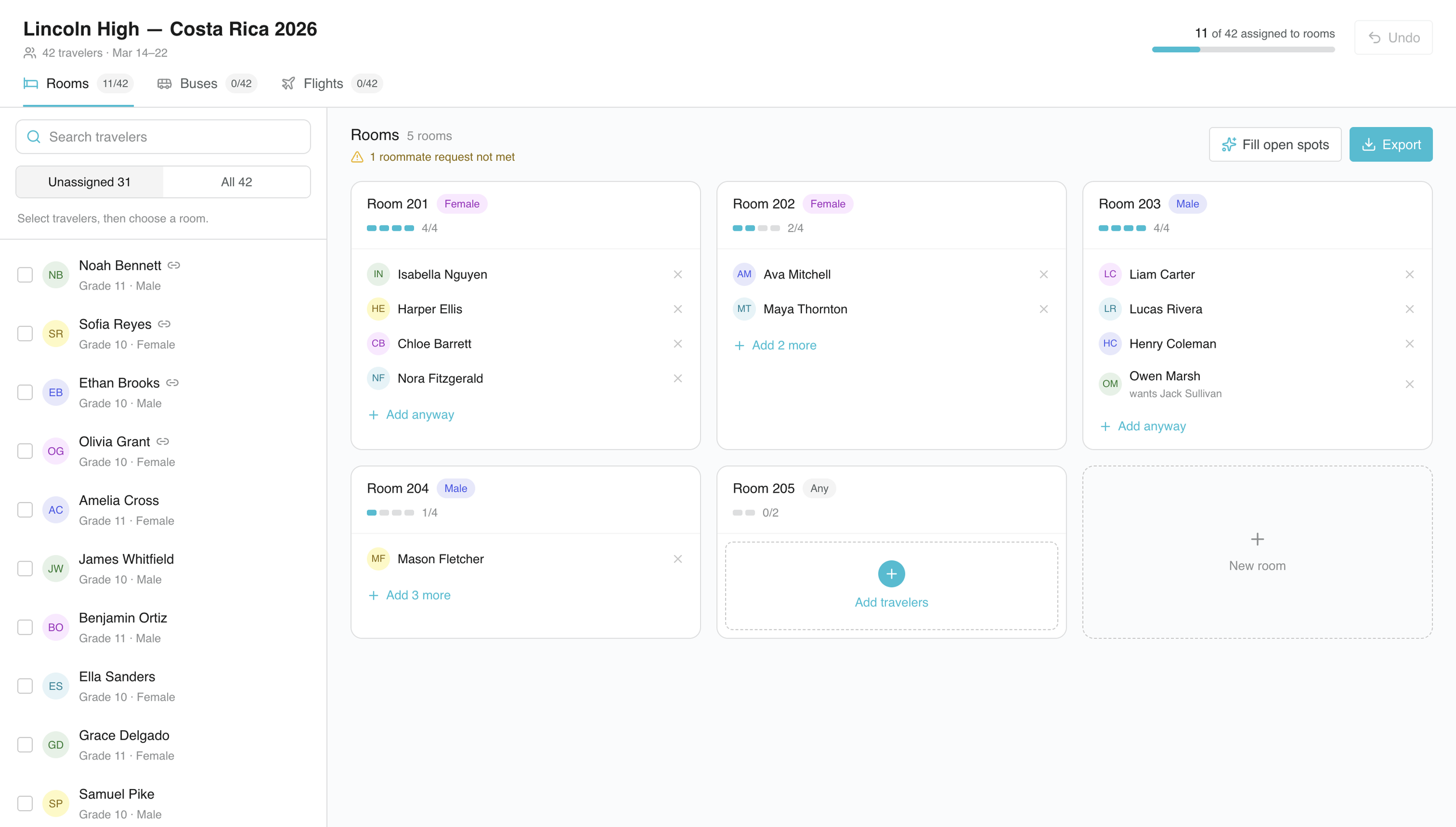
I designed a group logistics tool that moved room, bus, and flight assignments out of spreadsheets and into the platform where organizers already manage traveler data.
Timeline
6 weeks
Team
Solo Product Designer · PM · 3 engineers
Product area
Supply / Group Travel Operations
PROJECT
Bringing group logistics into the booking workflow
Organizers already managed traveler information in the platform, but room, bus, and flight assignments happened separately in spreadsheets. I owned the design of a new workflow that brought those tasks into the product, from discovery and interaction design through post-launch iteration.
Outcome
Rooming Lists replaced an off-platform workflow with a tool connected directly to existing traveler data. After launch, session recordings revealed where assignment was still slow, leading to improvements in bulk actions and navigation.
PROBLEM
Duplicate work, stale data, manual errors
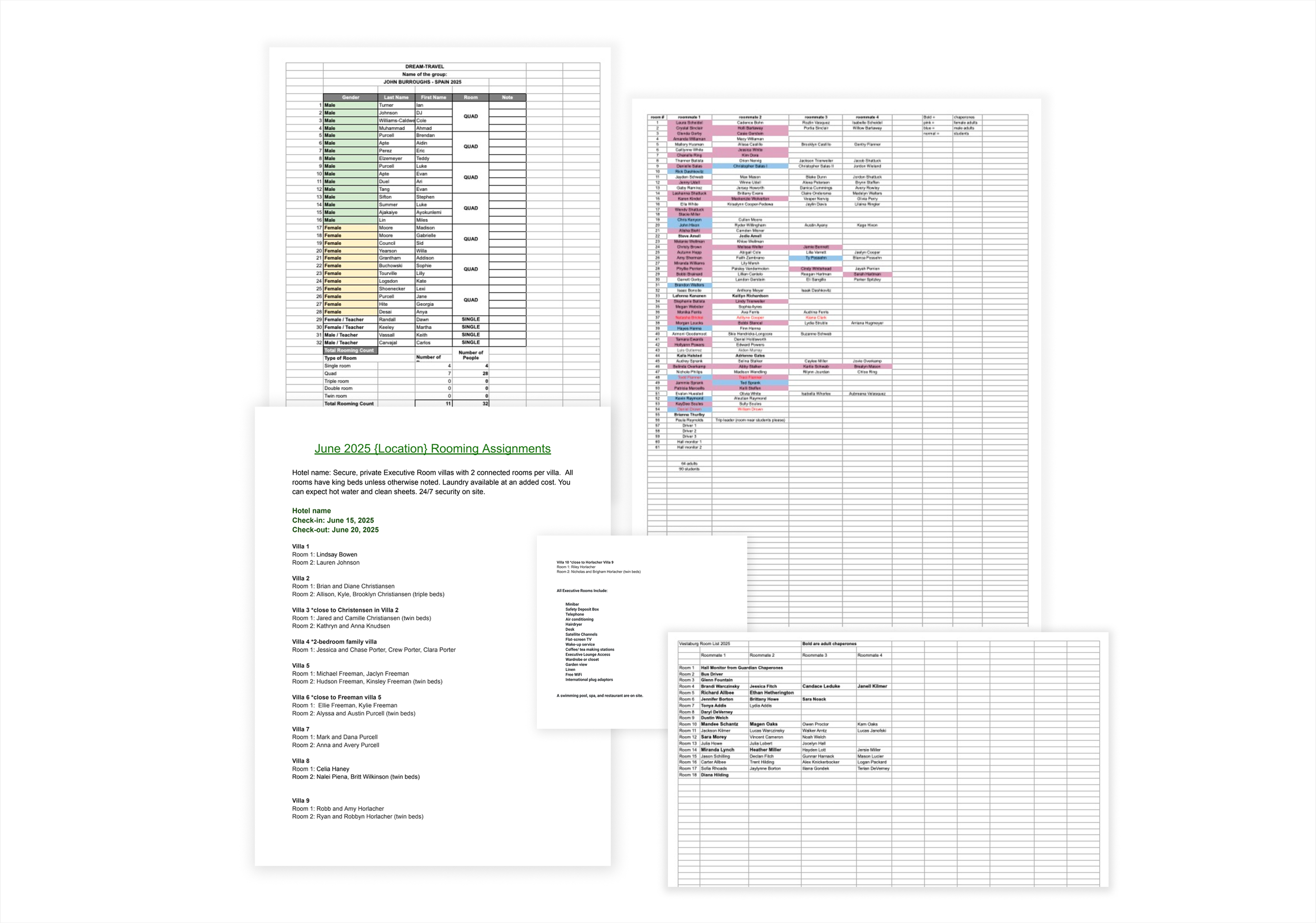
The platform already contained the traveler data organizers needed. But to build rooming lists, they exported or copied that information into spreadsheets, manually grouped travelers, and sent the results to hotels. Every booking change created another synchronization problem.
Examples of real rooming workflows organizers maintained outside the platform
Learning how organizers manage groups
DISCOVERY
With a six-week timeline, I used internal subject-matter expertise to quickly understand the customer workflow. I spoke with teammates who worked closely with group travel organizers and used their insights to map how customers were managing rooming lists, where the process broke down, and what they needed from an in-product tool.
The key insight
Assigning travelers was the bottleneck. Organizers could create rooming lists, but assigning dozens of travelers—while keeping track of capacity, requests, and who was already placed—was where the process became slow and confusing.
Organizers also needed to: export lists for hotels · capture special requests · collaborate with group leaders · duplicate similar lists.
IDEATION
Finding a way to assign travelers at scale
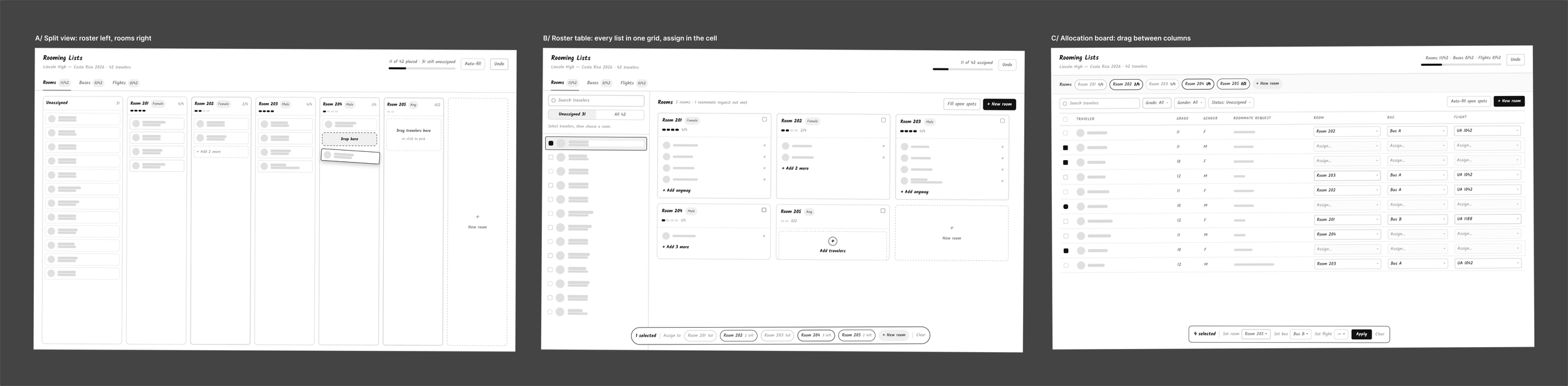
The core interaction had to work for groups ranging from a handful of travelers to hundreds. I explored different ways to keep travelers and rooms visible while making it easy to see who was assigned, where space was still available, and what still needed attention.
These explorations helped us narrow down the interaction model before I moved into the detailed design.
DESIGNS
From list creation to traveler assignment
For the initial release, designed the experience around three connected tasks: creating a list, setting up rooms, and assigning travelers using booking data already in the platform.
LESSONS
What I took from the project
Real usage revealed friction we couldn't anticipate upfront.
Interactions that work for small groups don't always scale to hundreds of travelers.
Small workflow improvements can remove a lot of repetitive work.
Performance constraints are part of the UX, not just an engineering concern.